
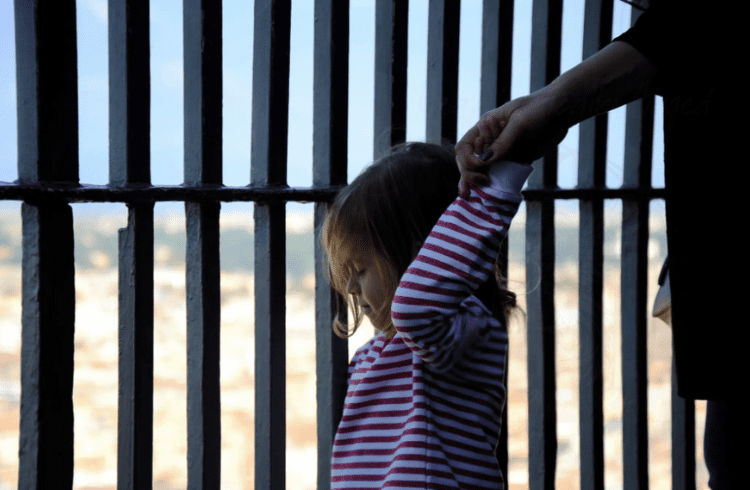
Hey, beautiful empresses, especially my incarcerated mommy warriors out there. Your girl Phoenix is back with one that’s going to hit different—straight to the heart and probably make us all need some tissues. Today we’re talking about something that the justice system conveniently forgets when they’re handing out sentences: we’re not just inmates, we’re MOTHERS.
This blog is for my incarcerated mommies—the ones who were detained while pregnant, the ones with minor kids on the outside wondering where Mama went, and the ones who have to explain to their babies why they can only hug through glass. You all are the strongest women I know, and if anyone tries to tell you differently, send them my way and I’ll set them straight.
The Heartbreak Olympics: Visitation Edition
As a mother of two small children, I am emotionally torn when it comes to seeing them leave visitation on the weekends. And when I say “emotionally torn,” I mean it feels like someone is doing surgery on my heart with a rusty spoon—no anesthesia, no warning, just pure emotional brutality.
The first time I had a visitation with them, my heart lit up when I saw them, and broke into a million pieces as soon as I had to say goodbye. It’s like winning the lottery and then being struck by lightning immediately. The joy of seeing their little faces, hearing their voices say “Mommy!” and feeling their tiny arms wrap around you is everything. But then that announcement comes over the intercom: “Visitation is now over”—and suddenly you’re living in your own personal horror movie.
Mind you, I came to prison while my babies were 1½ and 3 years old, so they were still in that stage where they don’t fully understand why Mommy can’t come home with them. Try explaining to a toddler why you have to stay in a place that looks like a really unfriendly daycare center with really tall fences. It’s both impossible and heartbreaking at the same time.
So I feel for the mommies who had to have their babies while incarcerated—y’all are dealing with a whole different level of pain that I can’t even fully comprehend.
The Ultimate Cruel and Unusual Punishment
I really don’t think a judge should put pregnant women in prison; that is cruel and unusual punishment. And I don’t care what anybody says—if you’re sentencing a pregnant woman to jail, you’re basically sentencing two people. Last time I checked, that unborn baby didn’t commit any crimes unless kicking your ribs at 2 AM is now considered assault.
That is a punishment on its own to have to leave your kids at home and then come to prison to have the next one. It’s like being forced to miss your own child’s birth and first months of life as some twisted form of “justice.” How is that rehabilitating anyone? How is that serving society? All it’s doing is creating more trauma and breaking up families in the cruelest way possible.
A Story That Will Break Your Heart
I spoke to a pregnant incarcerated woman—and I don’t like calling us inmates because we are still PEOPLE, human beings with hearts, souls, dreams, and children who need us—about her journey of being pregnant here. Let me tell you, her story made me want to write angry letters to every judge in the country.
She told me that Tuesday is the most depressing and saddest time of her life, knowing that she is going to have to give up her newborn baby after birth. Tuesday—not because anything evil happens on Tuesday, but because that’s when the reality hits her hardest. That’s when she thinks about all the Tuesdays she’ll miss with her baby, all the Tuesday morning snuggles, all the “terrible Tuesday” tantrums that she won’t be there to comfort.
But here’s the part that absolutely broke me: she said that when you have your baby, you can only spend 72 hours with them and then they come and SNATCH THEM AWAY! SEVENTY TWO HOURS! That’s three days. Three measly days to bond with the child you carried for nine months, to memorize their face, to tell them how much you love them before they’re ripped from your arms.
How depressing is that? How traumatizing is that for both mother and child? We spend more time with a library book than these mothers get to spend with their newborns. It’s absolutely barbaric, and anybody who thinks that’s “justice” needs to reevaluate their definition of humanity seriously.
The System’s Backwards Logic
Let me paint you a picture of how backwards this system is: A woman defends herself and her unborn child from someone trying to harm them. She makes a split-second decision to protect two lives—her own and her baby’s. The courts decide that this act of protection deserves punishment, so they send her to prison while pregnant.
Now, instead of being home where she can eat properly, rest, go to doctor appointments, and prepare for her baby’s arrival, she’s in a concrete box eating mystery meat and wondering if the stress is affecting her child’s development. She gives birth in shackles (yes, that still happens), gets 72 hours with her baby, and then has to watch strangers take her child away while she’s still bleeding from delivery.
Tell me how ANY of that makes sense. Tell me how that serves justice, protects society, or rehabilitates anyone. I’ll wait.
What Rehabilitation Should Actually Look Like
I really don’t believe that if a woman had to defend herself while pregnant to save her life and her child’s life, that calls for prison punishment. That’s not criminal behavior—that’s maternal instinct at its most pure and potent.
I think a better punishment should be home incarceration, house arrest, or something of that nature, so that they can still be with their child and have that bond and be a part of raising them. Give her an ankle monitor, make her check in with a probation officer, require counseling, mandate community service—but don’t separate a mother from her newborn baby. That’s not punishment; that’s torture.
That is what rehabilitation means—helping someone become a better person and a productive member of society, not punishing them to the extent that they are disconnected from society, let alone their newborns and children. How is a woman supposed to learn better parenting skills when she’s not allowed to parent? How is she supposed to become a stable, contributing member of society when you’ve destroyed her most important relationships?
It seems that my perspective makes more sense than the twisted logic the justice system is using. The Ripple Effects Nobody Talks About
Let’s talk about what happens to the kids on the outside, because their trauma matters too. When you incarcerate a mother, you’re not just punishing her—you’re punishing innocent children who didn’t ask for any of this.
These kids end up bounced around from family member to family member, or worse, thrown into the foster care system. They develop attachment issues, behavioral problems, academic struggles, and a whole host of trauma responses that will affect them for years. They start acting out at school, they have nightmares, they ask everyone, “Where’s my mommy?” until the adults stop knowing how to answer.
And then society dares to act surprised when these kids grow up with trust issues, when they struggle with relationships, when they make poor choices as teenagers and young adults. We’ve literally created a cycle of trauma and then wonder why it keeps perpetuating itself.
The Economics of Cruelty
Let’s talk dollars and cents for a minute, because apparently that’s the only language some people understand. Do you know how much it costs to incarcerate a woman for a year? We’re talking anywhere from $30,000 to $70,000, depending on the state in which you reside. Now multiply that by the number of mothers behind bars, and we’re looking at billions of dollars.
You know what costs way less? Home monitoring. Probation supervision. Community service programs. Mandatory parenting classes. Counseling. Job training. All of these alternatives cost a
fraction of what it takes to incarcerate someone, and they actually serve the stated goals of rehabilitation and public safety.
But instead, we spend billions to separate families, traumatize children, and create more problems than we solve. Make it make sense.
The Mothers Who Raise Each Other
One beautiful thing I’ve witnessed here is how the mothers take care of one another. When one of us gets a sad letter from home, when someone misses their child’s birthday, when a mama is crying because she couldn’t afford to put money on the phone to call her kids—we rally around each other.
We share our commissary, we listen to each other’s stories, and we look at pictures of each other’s children as if they were our own nieces and nephews. We celebrate when someone receives good news from home, and we support one another when the news isn’t so good.
The women who’ve given birth in here? They’re treated like queens by the rest of us. We make sure they have everything they need, we listen to them talk about their babies, we help them pump milk even though they have no baby to give it to (because somehow the body’s love doesn’t understand incarceration). We created a village because the system refused to let us keep our own.
Letters That Break and Heal
The letters from our children are both our greatest joy and our deepest pain. My 3-year-old draws me pictures of our house with stick figures that say “Mommy, come home.” My younger one, who barely understood words when I left, now writes “I miss you” in shaky letters that look like they took him an hour to write.
These letters keep us going, but they also remind us daily of what we’re missing. First words we didn’t hear, first steps we didn’t see, nightmares we couldn’t comfort, scraped knees we couldn’t kiss better, bedtime stories we couldn’t read.
But here’s what these letters also do—they remind us why we have to come out of this better than we went in. They remind us that we have little people counting on us to figure it out, to heal, to grow, to become the mothers they deserve.
The Strength We Never Knew We Had
Being an incarcerated mother teaches you strength you never knew existed. You learn to cry quietly so your cellmate can sleep. You learn to smile during phone calls even when your heart is breaking. You learn to be strong in letters even when you feel weak. You learn to find hope in the darkest places because your children need you to survive this.
You learn to forgive yourself for the choices that led you here, because your children need a mother who can love herself enough to make better choices moving forward. You learn that loving your children sometimes means missing them, because the alternative—continuing down a destructive path—would hurt them even more.
A Message to the Judges
To every judge who has sentenced a pregnant woman to prison: I hope you never have to watch your daughter give birth in shackles. I hope you never have to explain to your grandchildren why they can only see their mother through glass. I hope you never have to witness the kind of pain you casually hand down from your bench.
But if you do, perhaps then you’ll understand that justice without mercy isn’t justice at all—it’s just cruelty disguised in robes and legal language.
A Message to My Fellow Warrior Moms
To my incarcerated mothers reading this: you are not defined by your worst moment. You are not a bad mother because you made a mistake. Your children need you to heal, to grow, to fight to become the woman and mother you were meant to be.
Use this time, as difficult as it is, to address whatever led you here. Get therapy if it’s available. Take classes. Read books. Work on yourself so that when you get out, you can be the mother your children remember, not the one who left.
Your children are not better off without you—they’re better off with a healed, healthy, whole version of you. So do the work. Fight for your freedom. Fight for your family. Fight for your future.
The Hope We Hold Onto
One day, this will be over. One day, you’ll walk out those doors and back into your children’s arms. One day, the bedtime stories will be real again, the hugs will last as long as you want them to, and “Mommy’s home” will be the sweetest words you’ve ever heard.
Until then, we hold onto each other, we hold onto hope, and we hold onto the love that no prison wall, no judge’s sentence, and no system can ever take away from us.
Because we’re not just inmates. We’re mothers. And that love? That’s unbreakable, unchangeable, and unconditional.
Keep fighting, empresses. Your babies need you to come home whole.
Phoenix Rising continues to advocate for incarcerated mothers and their children, using her platform to shed light on the often-overlooked trauma of family separation within the justice system. Her words serve as both comfort to mothers behind bars and a call to action for systemic change.